
There's a moment in every successful gaming franchise where lightning strikes. Not the commercial lightning that brings sequels and merchandising deals, but the creative lightning that defines what the series could become at its absolute best. For Halo, it was Halo 2's revolutionary online multiplayer. For Mass Effect, it was the second game's perfect balance of RPG depth and accessible storytelling. For Assassin's Creed, many would argue it was Brotherhood's refined formula and compelling protagonist.
 Photo: Assassin's Creed, via www.watchmojo.com
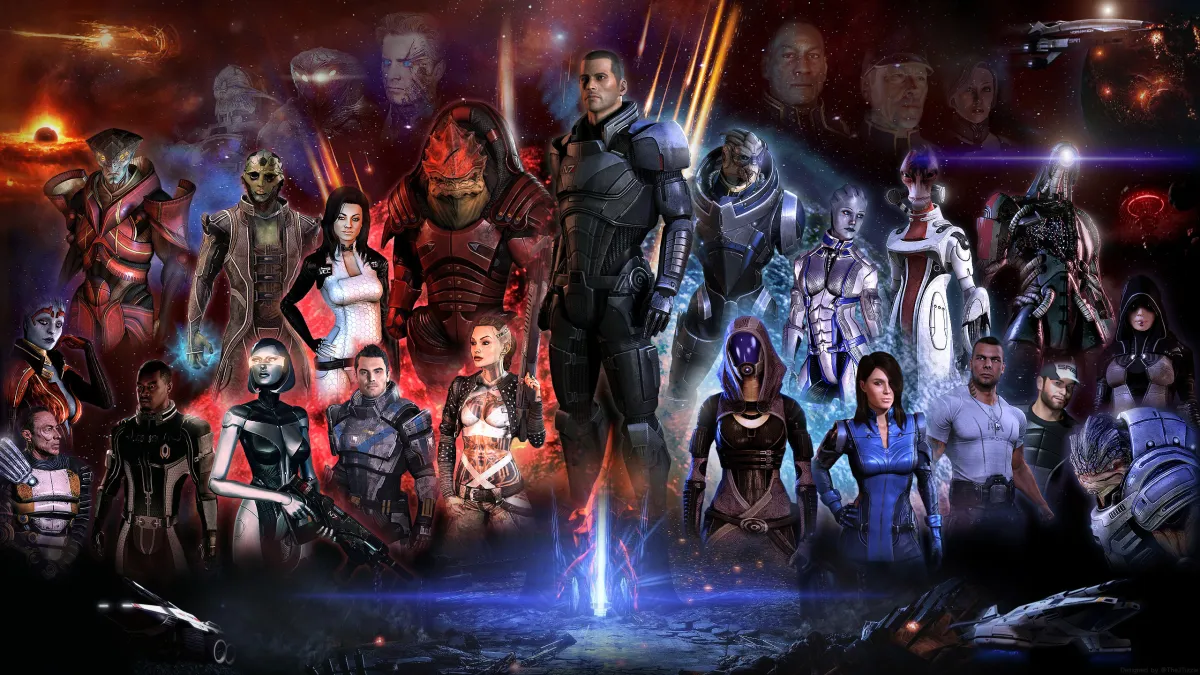 Photo: Mass Effect, via eskipaper.com
The tragedy? Most franchises never reach those heights again.
The Peak Performance Problem
This phenomenon isn't unique to gaming, but it's particularly pronounced in our industry due to the technical and creative complexity of modern game development. When a franchise hits its creative ceiling — that perfect storm of innovative design, technological capability, and cultural timing — everything that follows becomes an exercise in diminishing returns.
Consider the Halo franchise. After the groundbreaking innovations of Halo 2 and the narrative culmination of Halo 3, every subsequent entry has felt like an attempt to recapture magic that was inherently tied to its specific moment in gaming history. Halo 4 tried to modernize the formula but lost the series' distinctive identity. Halo 5 doubled down on contemporary shooter trends that felt alien to longtime fans. Even Halo Infinite, despite its return to classic aesthetics, struggles to justify its existence beyond nostalgia.
The Innovation Trap
Why do successful franchises struggle to surpass their own achievements? The answer lies in what I call the "innovation trap." When a game achieves breakthrough success, it creates enormous pressure to both preserve what made it special and evolve beyond it. This dual mandate is nearly impossible to satisfy.
Take Assassin's Creed. The series peaked creatively with Brotherhood and Revelations, games that perfected the formula established in AC2 while adding meaningful innovations like the Brotherhood recruitment system and improved traversal mechanics. But Ubisoft faced a choice: continue iterating on a perfected formula or completely reinvent the series for a new generation.
They chose reinvention with Origins, Odyssey, and Valhalla — games that are technically superior and commercially successful but lack the focused vision that made the Ezio trilogy special. The series traded its unique identity for broader market appeal, hitting a new commercial ceiling while abandoning its creative one.
The Annual Release Ceiling
Perhaps no factor contributes more to franchise creative stagnation than the pressure of annual or near-annual releases. When Call of Duty peaked with Modern Warfare 2, the series had established a template that subsequent entries have been following ever since. The innovation that defined that peak — seamless single-player spectacle, balanced multiplayer progression, and technical excellence — became a formula to be replicated rather than surpassed.
Annual release schedules create a development ceiling that prevents the kind of long-term creative risks necessary for breakthrough innovation. Teams become focused on iteration and safety rather than revolution. The result is franchises that maintain commercial viability while slowly eroding their creative potential.
The Sequel Paradox
The most successful franchises often face what I call the "sequel paradox" — the more successful they become, the less creative freedom they have to evolve. Mass Effect 2 is widely considered the series' creative peak because it perfectly balanced the RPG elements that defined the original with the streamlined accessibility that made it a mainstream success. But that success created expectations that constrained Mass Effect 3 and nearly killed the franchise with Andromeda.
When a franchise establishes its creative ceiling, every subsequent entry is measured against that standard. This creates a conservative development environment where innovation is seen as risky deviation rather than necessary evolution. Publishers would rather have a "good enough" sequel that meets expectations than risk a creative failure that might redefine the franchise.
Breaking Through: The Rare Success Stories
Some franchises do manage to break through their apparent creative ceilings, but it usually requires dramatic reinvention that risks alienating existing fans. The Zelda series seemed to hit its creative peak with Ocarina of Time and Majora's Mask, spending decades iterating on that formula with diminishing returns. Breath of the Wild succeeded by essentially starting over, abandoning the series' established conventions in favor of emergent gameplay and exploration.
Similarly, God of War (2018) transcended the original trilogy's creative ceiling by completely reimagining what a God of War game could be. Rather than simply improving the hack-and-slash formula, Santa Monica Studio created an entirely new emotional and mechanical framework that felt both fresh and authentically connected to the series' roots.
The Publisher Pressure Cooker
Publisher expectations play a crucial role in franchise creative stagnation. When a series achieves breakthrough success, it becomes a valuable asset that must be protected and monetized. This leads to conservative decision-making that prioritizes brand safety over creative risk-taking.
The pressure to maintain consistent revenue streams means franchises often become trapped by their own success. Assassin's Creed generates hundreds of millions in revenue annually, making it nearly impossible for Ubisoft to take the kind of creative risks that might lead to another Brotherhood-level breakthrough.
The Technology Trap
Advancing technology should theoretically enable greater creative possibilities, but it often has the opposite effect on established franchises. As development costs increase and technical complexity grows, studios become more risk-averse. The budget required to create a modern AAA sequel makes creative experimentation financially dangerous.
This technological pressure creates a ceiling on creative ambition. Studios focus on delivering technical improvements — better graphics, larger worlds, more complex systems — while avoiding the kind of fundamental design innovations that created their original peaks.
Learning from the Ceiling
Understanding franchise creative ceilings offers valuable lessons for both developers and players. For developers, it suggests that true innovation requires a willingness to abandon successful formulas in favor of unproven ideas. For players, it explains why our favorite franchises often feel like they're slowly losing their magic.
The most important insight is that creative ceilings aren't necessarily permanent. They're often self-imposed limitations based on fear of change rather than actual creative constraints. The franchises that successfully break through their ceilings do so by embracing radical change rather than incremental improvement.
Recognizing when a franchise has hit its creative ceiling isn't an indictment of the developers or publishers involved — it's an acknowledgment of the complex pressures that shape modern game development. The real question isn't whether franchises will hit creative ceilings, but whether they'll have the courage to break through them.