Grading the Switch 2's First Holiday Season: What Nintendo Promised vs. What Actually Shipped
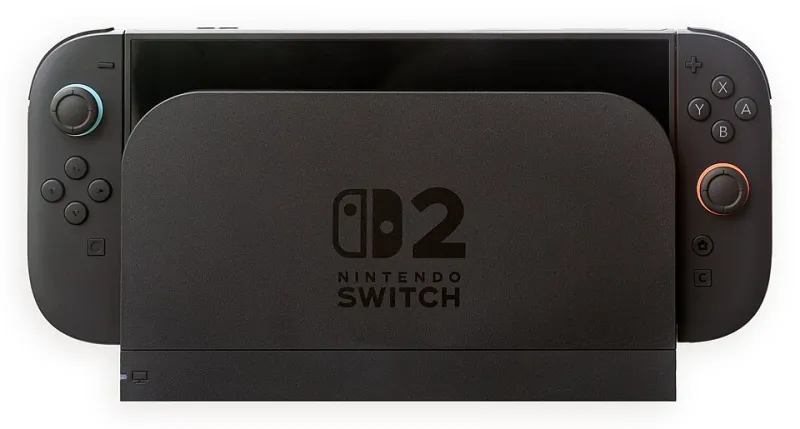
Photo: Crisco 1492, CC BY-SA 4.0, via Wikimedia Commons
Every console generation gets judged by its first holiday season, and every console generation gets a partial pass. The Switch 2's first Christmas in American living rooms is here, so let's do the thing nobody politely does: grade the 2026 software lineup against what Nintendo actually promised at its Directs. No nostalgia, no benefit of the doubt, just receipts.
The First-Party Report Card
Mario Kart World — A. The launch flagship did exactly what a launch flagship should: sold hardware, defined the platform, and gave families the one game they'd play for 300 hours. Nintendo's biggest launch title ever, and it earned it.
Donkey Kong Bananza — A-. The summer's surprise hit proved the Switch 2's raw horsepower with destruction tech the original Switch couldn't dream of. Docked mode looked great; handheld battery life took a hit. Docked players got the better end of that deal.
Metroid Prime 4: Beyond — B+. Finally shipped in 2026 after nearly a decade in development, and it mostly stuck the landing. A generation-defining comeback story — though the fact that it launched on both Switch and Switch 2 tells you which console Nintendo originally built it for.
Kirby Air Riders — B. Masahiro Sakurai's return delivered exactly the chaotic multiplayer toybox he promised, and nothing more. Great for game night; thin for solo players. Solid, not spectacular.
Hyrule Warriors: Age of Imprisonment — B. Koei Tecmo's musou machine did its job for the holiday season. Nobody's game of the year, everybody's December gift.
The Third-Party Ledger
Here's where the report card gets complicated. Nintendo promised us third-party support that the original Switch never quite got at launch, and to be fair, they delivered more than usual: Elden Ring Nightreign, Final Fantasy VII Remake, Hogwarts Legacy, and a wave of Switch 2 Edition upgrades with performance patches actually worth the upgrade fee in some cases. Call it a B+ — better than the Wii U's disaster and the Switch 1's trickle, still short of the parity Nintendo's marketing implied.
The stumbles? A handful of announced titles slipped into 2027, and some third-party ports arrived at $70-80 with performance that didn't always justify the premium over their $20-30 last-gen counterparts. US retail pricing has been the season's real story — with base Switch 2 software pushing $70-80 and marquee titles flirting higher, the value proposition math is getting harder for American families doing holiday budget math.
So Is the Launch Window Curse Back?
Here's my honest read: partially. The Switch 2's first year had more genuine blockbusters than the PS5 or Xbox Series X managed in theirs — that's just true. But the back half of 2026 leaned hard on enhanced ports and spinoffs while the true system-sellers (you know the ones) wait in the wings, and the holiday lineup was carried more by momentum than by new heavyweights.
That's not a failure. That's the modern launch window, and Nintendo executed it better than most. But if you're a parent buying a Switch 2 this December expecting a deep library, know what you're getting: a handful of all-timers, a solid bench, and a promise that the best is coming. Same as it ever was.
Final grade: B+. Better than the norm, short of the hype. The console's real test isn't this holiday — it's whether 2027 justifies the box everyone already bought.