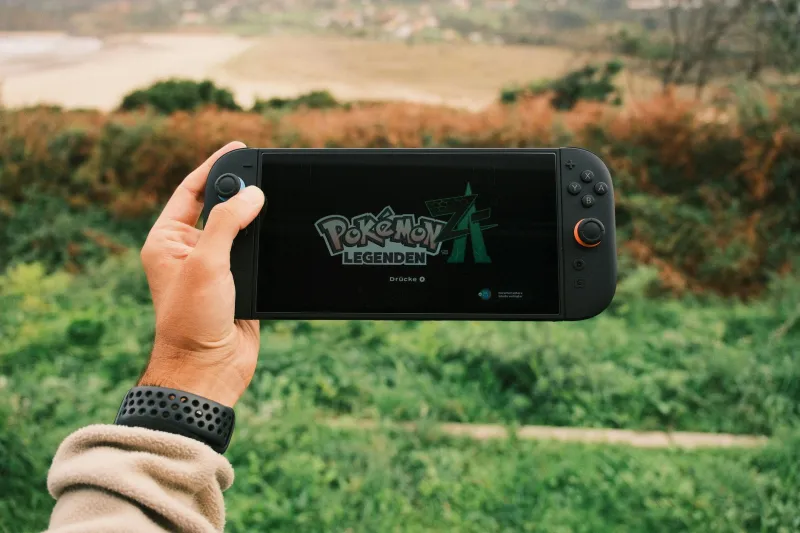
The Crossplay Wall: Gaming's Biggest Multiplayer Problem Was Never About Technology
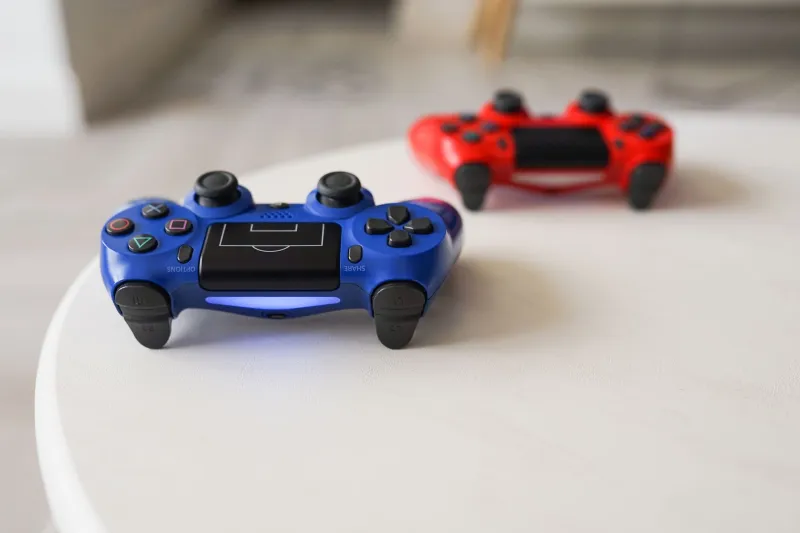
The Crossplay Wall: Gaming's Biggest Multiplayer Problem Was Never About Technology
Here's a sentence that should sound absurd in 2026: two friends who both own the same game, both have fast internet connections, and both want to play together cannot do so because one of them bought a PlayStation and the other bought an Xbox. The technology to fix this has existed for the better part of a decade. The will to deploy it universally has not. Crossplay — the ability to play multiplayer games across different hardware ecosystems — remains one of the most inconsistently implemented features in an industry that loves to talk about player experience while quietly protecting platform revenue.
How We Got Here
The console wars of the early 2000s established a model that platform holders have never fully abandoned: your friends list is a retention mechanism. If everyone you know is on PlayStation, you stay on PlayStation. Crossplay breaks that mechanism. It decouples social graphs from hardware purchases. And for companies whose entire business model depends on ecosystem lock-in, that's not a feature — it's a threat.
Sony was the most visible holdout for years. The company's resistance to Fortnite crossplay in 2018 became a flashpoint, and the eventual reversal — driven by player backlash and Epic Games' willingness to apply public pressure — was framed as a concession rather than a policy shift. And that framing was accurate. Sony didn't change its philosophy; it changed its calculus. When the cost of blocking crossplay (PR damage, player frustration, competitive disadvantage for the platform's titles) exceeded the benefit (ecosystem retention), the wall came down. For that game. That calculus is still being run title by title, platform by platform, in 2026.
The Titles That Got It Right — and What It Cost Them
Fortnite. Rocket League. Call of Duty. Minecraft. These are the standard-bearers for crossplay done well, and what they share is instructive. They're either owned by publishers powerful enough to negotiate crossplay from a position of strength, or they're games so dominant in their category that platform holders couldn't afford to block them without alienating their own player bases. Crossplay, in other words, tends to get implemented when it's commercially unavoidable — not because platform holders suddenly decided to prioritize players.
Smaller multiplayer titles don't have that leverage. A mid-tier online shooter from an independent studio doesn't have the negotiating power to demand crossplay from Sony, Microsoft, and Nintendo simultaneously. So it ships with fragmented player pools, watches its matchmaking times balloon on the smaller platforms, and slowly loses its community to the slow bleed of unsustainable queue times. The studios most hurt by crossplay fragmentation are the ones with the least power to fix it.
The Walled Garden Economics
Understanding why crossplay remains inconsistent requires understanding what platform holders actually sell. Hardware margins on consoles are notoriously thin — sometimes negative at launch. The money is in the ecosystem: the storefront cut, the subscription services, the first-party titles, and the network effects that keep users inside the fence. PlayStation Plus and Xbox Game Pass are not just subscription services; they're retention infrastructure. The more your social life is tied to a platform, the less likely you are to leave it.
Crossplay disrupts this by making platform choice less socially consequential. If you can play with your friends regardless of which box sits under your TV, the platform's social moat shrinks. That's a real financial risk for companies whose valuations are partly built on ecosystem stickiness. The resistance to universal crossplay isn't irrational corporate stubbornness — it's a rational defense of a revenue model. Which makes it harder to fight, not easier.
PC Is Its Own Problem
It's tempting to frame this as a console-specific issue, but PC crossplay is its own mess. Steam, Epic Games Store, Xbox app, Battle.net, and various proprietary launchers each operate their own friend systems and multiplayer infrastructure. A game that supports crossplay between PS5 and Xbox might still wall off its PC players by launcher. The fragmentation isn't just horizontal (console vs. console) — it's vertical (console vs. PC vs. launcher ecosystem). A truly unified player pool across all platforms and storefronts remains vanishingly rare, and the titles that achieve it deserve more credit than they typically receive.
What Players Are Actually Losing
The practical cost of crossplay fragmentation is measured in queue times, dead servers, and games that die before their time. A multiplayer game with a split player base is a multiplayer game with a shorter lifespan. When your PS5 player pool can't merge with your Xbox pool, both communities are smaller than they need to be to sustain healthy matchmaking. Niche genres — fighting games, tactical shooters, survival games with small but passionate communities — suffer disproportionately. The players who care most about these games are the ones most directly punished by the platform walls keeping them apart.
There's also a social cost that's harder to quantify. Gaming is one of the primary ways Americans maintain friendships across distance — particularly for players in their 20s and 30s who've dispersed geographically since college. Telling someone they can't play with their friends because of a hardware purchase they made three years ago isn't a minor inconvenience. It's a genuine barrier to the thing that makes multiplayer games worth playing.
The Fix Nobody Wants to Mandate
Regulatory intervention has been floated, particularly in Europe, where the EU's Digital Markets Act has started to create pressure around interoperability in digital services more broadly. Whether that pressure extends meaningfully to gaming crossplay remains to be seen. In the US, there's no equivalent framework on the horizon. The most realistic path to universal crossplay is continued commercial pressure — publishers and developers demanding it as a condition of their titles appearing on platform storefronts, and players making noise loudly enough that the PR math shifts.
The technology is not the obstacle. It hasn't been for years. The obstacle is a business model that profits from keeping you separated from your friends — and an industry that's polite enough not to say that out loud.
The Verdict
Crossplay in 2026 is a solved technical problem wearing an unsolved political costume. Every time a developer announces full crossplay support, it's worth celebrating — because it means someone, somewhere, won a negotiation they didn't have to win. The players who benefit rarely know the fight happened. And the players still stuck behind platform walls rarely know why the door won't open. It's not a technology problem. It never was. It's a money problem. And money problems in this industry tend to resolve themselves only when the alternative becomes more expensive than the fix.