The Franchise Baptism: Why the 'Best Entry Point' Into a Long-Running Series Is Always the Wrong Answer

The Franchise Baptism: Why the 'Best Entry Point' Into a Long-Running Series Is Always the Wrong Answer
Ask any Final Fantasy fan where a newcomer should start, and you'll get a confident answer: "VII or X, definitely not XIII, maybe VI if you can handle older graphics." Ask a Yakuza enthusiast, and they'll insist: "Zero is the perfect entry point — it's a prequel, so you won't be lost."
Every long-running gaming franchise has developed this folklore around the "best entry point" — the specific game that fans believe will hook newcomers and convert them into lifelong series devotees. There's just one problem: all of this well-intentioned advice is backfiring spectacularly.
New data on player behavior and franchise retention suggests that starting mid-series is one of the worst things you can do for long-term engagement. The games that fans love most as entry points are systematically failing to create new fans, and the industry's obsession with accessibility is making the problem worse.
The Accessibility Trap
The conventional wisdom around franchise entry points prioritizes immediate accessibility over long-term investment. Fans recommend Final Fantasy VII because it has 3D graphics and a memorable opening. They suggest Yakuza 0 because it explains the backstory. They point newcomers toward Assassin's Creed II because the first game "hasn't aged well."
 Photo: Final Fantasy VII, via s-media-cache-ak0.pinimg.com
All of this advice shares a common flaw: it assumes that the best way to get someone invested in a franchise is to show them the franchise at its most polished and refined. But polish and refinement are the enemies of the discovery process that creates genuine franchise loyalty.
When you start with a series' acknowledged masterpiece, everything that comes after feels like a step backward. When you begin with the most accessible entry, you never develop the tolerance for friction that makes the rest of the franchise navigable. When you jump in at the "perfect" starting point, you miss the evolutionary journey that helps players understand why these games matter.
The Sunk Cost Advantage
Long-running franchises aren't just collections of individual games — they're cumulative experiences that build meaning through repetition and variation. The players who stick with a series for decades aren't necessarily the ones who fell in love with the "best" entry. They're the ones who developed investment through struggle, who learned to appreciate incremental improvements, who felt ownership over the franchise's growth.
Starting from the beginning creates sunk cost investment in a way that jumping in mid-series never can. When you've suffered through the original Assassin's Creed's repetitive mission structure, Assassin's Creed II feels like a revelation. When you've mastered Final Fantasy I's obtuse mechanics, every subsequent quality-of-life improvement feels earned rather than expected.
This isn't nostalgia or gatekeeping — it's basic psychology. Investment grows through effort, not convenience. The harder it is to get into something, the more valuable it feels once you're inside.
The Narrative Continuity Problem
Most "accessible" entry points are accessible precisely because they minimize or ignore the series' ongoing narrative threads. Yakuza 0 works as a standalone experience, but it also spoils major character reveals and relationship developments that were meant to unfold over multiple games. Final Fantasy X is self-contained, but it also establishes expectations about tone and complexity that earlier games can't match.
When newcomers start with these carefully crafted entry points, they're not actually entering the franchise — they're entering a sanitized version of it designed to avoid confusion rather than create investment. They're getting the franchise's highlights reel instead of its actual identity.
This approach fundamentally misunderstands why people become franchise fans in the first place. Long-term franchise loyalty isn't built on individual game quality — it's built on the relationship between games, the sense of participating in an ongoing conversation between developers and players that spans years or decades.
The American Impatience Factor
American gaming culture has a particular problem with franchise entry points because we've culturally embraced the idea that entertainment should be immediately rewarding. We want to skip the "bad" parts and get straight to the "good" stuff. We treat learning curves as bugs to be patched rather than features to be mastered.
This impatience makes us particularly susceptible to "best entry point" thinking. Rather than accepting that getting into a long-running franchise requires some investment and potentially some frustration, we look for shortcuts that promise immediate gratification.
But shortcuts don't create lasting relationships. The most devoted American franchise fans are usually the ones who discovered series early, often by accident, and grew up with them. They didn't choose the best entry point — they chose the available entry point and developed appreciation through exposure.
What the Data Actually Shows
Recent analytics from major publishers reveal some uncomfortable truths about franchise onboarding. Players who start with "accessible" mid-series entries have significantly lower completion rates for subsequent games in the franchise. They're more likely to abandon series when they encounter older, less polished entries. They show less tolerance for experimental or challenging installments.
Conversely, players who start from the beginning — even when the beginning is objectively rough — show higher long-term engagement, greater willingness to purchase multiple entries, and more tolerance for franchise experimentation. They're also more likely to evangelize the series to friends, creating organic growth rather than depending on marketing campaigns.
The data suggests that the "best entry point" advice is optimizing for the wrong metrics. It maximizes immediate satisfaction while minimizing long-term investment.
The Reboot Solution
The most successful recent franchise onboarding has come from full reboots rather than recommended entry points. God of War (2018), Doom (2016), and Resident Evil 2 Remake succeeded because they acknowledged that starting over was better than trying to find the perfect jumping-in point within existing continuity.
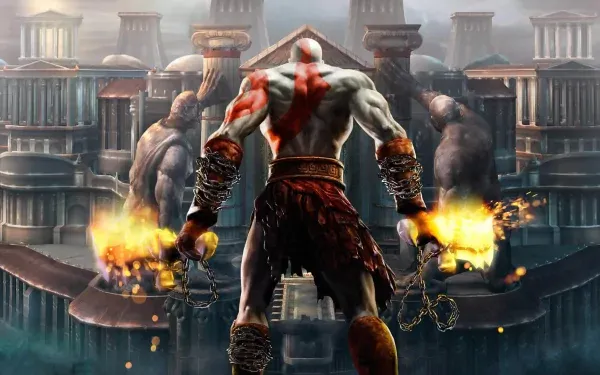 Photo: God of War, via images2.alphacoders.com
Reboots work because they're designed from the ground up for newcomers while respecting existing fans. They don't assume prior knowledge, but they also don't shy away from the elements that made the original franchises compelling. They create genuine entry points rather than artificial ones.
Building Better On-Ramps
The solution isn't to abandon accessibility — it's to build genuine accessibility rather than the illusion of it. This means:
Comprehensive Collection Releases that present entire franchises as cohesive experiences, with modern quality-of-life improvements applied consistently across all entries.
Transparent Difficulty Options that let players adjust challenge levels without hiding the underlying systems that make each game unique.
Cultural Context Features that explain why certain design decisions made sense in their historical moment, helping modern players appreciate rather than dismiss older entries.
Progressive Disclosure Systems that gradually introduce franchise-specific concepts and mechanics rather than assuming players will figure them out through trial and error.
The Real Entry Point
The best entry point into any franchise isn't a specific game — it's genuine curiosity about what the franchise represents and willingness to engage with it on its own terms. The worst entry point is the one that promises you can skip the learning process and get straight to the payoff.
Franchise baptism should be immersion, not optimization. The goal should be creating fans who understand and appreciate the entire series, not just its most polished moments.
Until the industry accepts that shortcuts don't create lasting relationships, we'll keep optimizing for immediate satisfaction while accidentally destroying the long-term investment that makes franchises worth preserving in the first place.