Nobody Plays Normal Mode Anymore — Because Normal Mode Was Built for Nobody
Every game ships with a Normal mode. It sits in the middle of the difficulty menu, flanked by Easy on one side and Hard on the other, often labeled something like "Story," "Balanced," or "Recommended." The name changes. The function doesn't. Normal is supposed to be the default — the experience the developers intended, calibrated for the broadest possible audience. The problem, in 2026, is that the broadest possible audience no longer exists in the way game designers are building for it. Normal mode has become a statistical ghost: designed for an average player who is, in practice, nobody.
The Mythical Average Player
Game difficulty calibration has always involved some degree of guesswork, but it used to be informed guesswork. Playtesting pools, focus groups, internal review sessions — studios would watch real people play their game and adjust accordingly. That process still happens. What's changed is the context around it.
The rise of streaming, YouTube tutorials, and gaming subreddits has created a player population that is, on average, significantly more experienced than the one developers were building for ten years ago. The average person who buys a new action RPG in 2026 has probably played dozens of them. They've watched hours of content about the genre. They've absorbed mechanical knowledge passively, through cultural osmosis, even if they've never personally beaten a FromSoftware title. The skill floor has risen across the board. Normal mode hasn't risen with it.
At the same time, the gaming audience has genuinely broadened. Accessibility features, mobile gaming, and the social normalization of gaming as a mainstream hobby have brought in players who are encountering certain genres for the first time. These players exist alongside the veterans in the same launch window, buying the same game, selecting Normal because it says "Recommended." The result is a difficulty setting that is simultaneously too hard for the newcomers and too easy for the experienced players — satisfying, by design, the middle of a bell curve that has stretched so wide it barely has a center anymore.
The Discourse That Broke the Calibration
Here's something developers won't always say on the record but will tell you off it: online discourse has materially influenced how studios set their default difficulty. The hardcore gaming community — disproportionately loud on Reddit, Twitter, and in YouTube comment sections — has spent years treating "Easy mode" as a moral failing and "Hard mode" as the only legitimate way to engage with a game. That cultural pressure has seeped into development decisions.
Studios calibrating for the vocal online audience tend to push their Normal mode harder than they would have a decade ago. They don't want the discourse to call their game "too easy." They don't want the review embargo to lift and have the first wave of coverage describe their combat as "shallow" because a seasoned player breezed through it on the default setting. So Normal gets tuned upward. Enemies hit harder. Resources are scarcer. The margin for error tightens. And the players who picked Normal because the menu told them it was "Recommended" find themselves dying repeatedly in the opening hours, quietly switching to Easy, and feeling vaguely embarrassed about it.
That embarrassment is a design failure, not a player failure.
The Accessibility Paradox
The last five years have seen a genuine, meaningful expansion of accessibility options in major releases. Subtitle sizing, colorblind modes, toggle vs. hold inputs, aim assist granularity, and full difficulty sliders have become increasingly standard. This is genuinely good. Games should be playable by more people. But the proliferation of accessibility options has had an unintended side effect on how studios think about difficulty presets.
When you give players fifty granular sliders, you can argue that the preset difficulties are less important — players can just tune it themselves. Which is true, in theory. In practice, most players don't touch the sliders. They pick a preset, accept it, and either have a good time or a bad one. The existence of customization options doesn't fix a broken default; it just gives studios a defense when players complain. "You can adjust it yourself" is not the same as getting the default right.
What the Data Actually Shows
Player behavior telemetry — when studios share it — tells a consistent story. A significant portion of players who start on Normal difficulty switch settings within the first two hours of gameplay. Some go up; most go down. The direction of the switch varies by genre and title, but the volume of switches is itself the signal. A well-calibrated Normal mode should be the setting most players stick with. When it's the setting most players leave, something is miscalibrated.
Player surveys conducted by third-party research firms in the past two years have found that between 35 and 45 percent of action game players report feeling that the default difficulty was "not quite right" for them — either too challenging or not challenging enough — within the first session. That's a massive miss for a setting that's supposed to be the primary design target.
Adaptive Difficulty: The Potential Fix Nobody Has Fully Shipped
The most compelling solution to the Normal mode problem isn't better static calibration — it's dynamic difficulty adjustment (DDA), and it's been theoretically viable for years. The concept is straightforward: the game monitors player performance in real time and adjusts parameters accordingly. Die three times to the same enemy? The enemy's health drops slightly, or its attack window widens. Breeze through a section without taking damage? The next encounter scales up.
Some games have implemented versions of this — Resident Evil 4's original adaptive difficulty system is the classic example, and several modern titles have borrowed from it. But full, transparent DDA at the scope of an entire game remains rare. Part of the hesitation is philosophical: some developers feel that invisible difficulty adjustment undermines player agency and the sense of genuine accomplishment. Part of it is technical: building a system that adjusts smoothly without players noticing the seams is genuinely hard. And part of it is the same discourse problem — the online community's hostility to anything that could be characterized as the game "going easy on you."
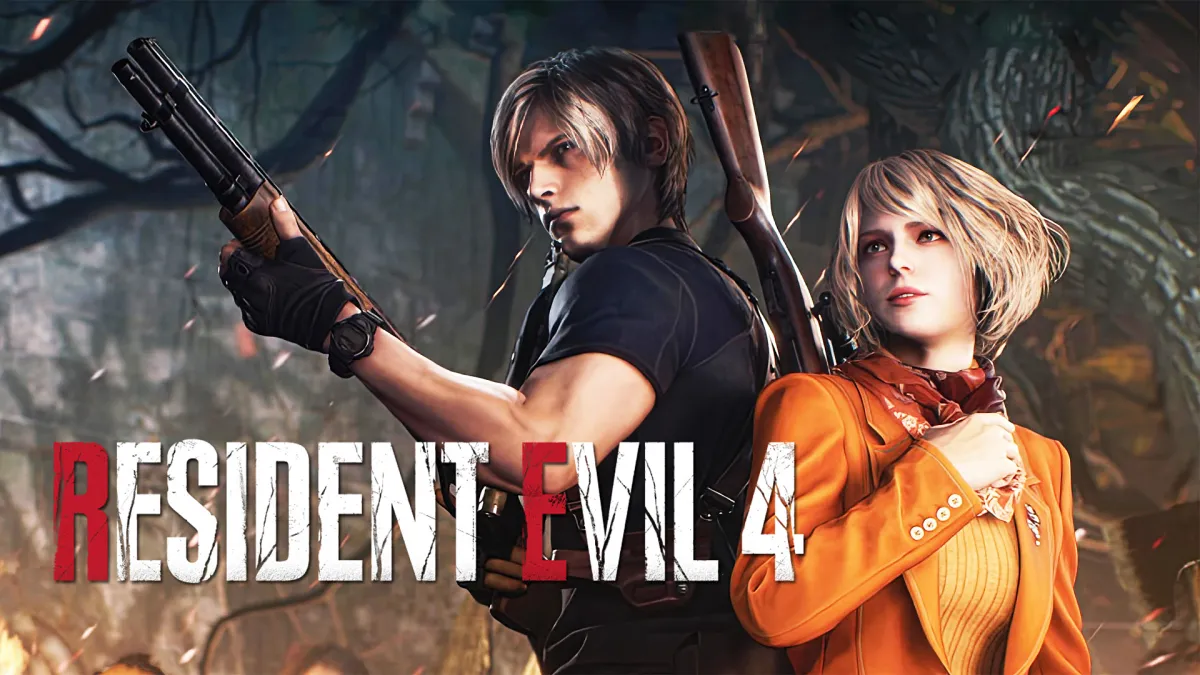 Photo: Resident Evil 4, via cdn.wccftech.com
But the technology is closer than it's ever been. AI-driven difficulty systems that model individual player behavior — not just track death counts, but analyze attack patterns, resource usage, and decision-making — are being developed and tested. If the next generation of adaptive difficulty can adjust in ways that feel natural rather than mechanical, it might finally solve the problem that static presets have failed to crack for thirty years.
The Middle Is the Loneliest Place
Normal mode, in 2026, is a compromise between competing design pressures that have pulled so far in opposite directions that the middle ground has caved in. It's too hard for the players who need a gentler on-ramp, too easy for the players who've been gaming for twenty years, and calibrated more for review discourse than for the person sitting on their couch at 10pm trying to unwind.
The fix isn't to eliminate difficulty presets. It's to be honest about what Normal is actually for — and to build adaptive systems capable of finding the right challenge for each individual player, rather than assuming a mythical average player will show up and be grateful for whatever the menu offers them.
The level cap on difficulty design hasn't been hit yet. But the default setting? It was set wrong. And it's been set wrong for long enough that players have stopped trusting it.