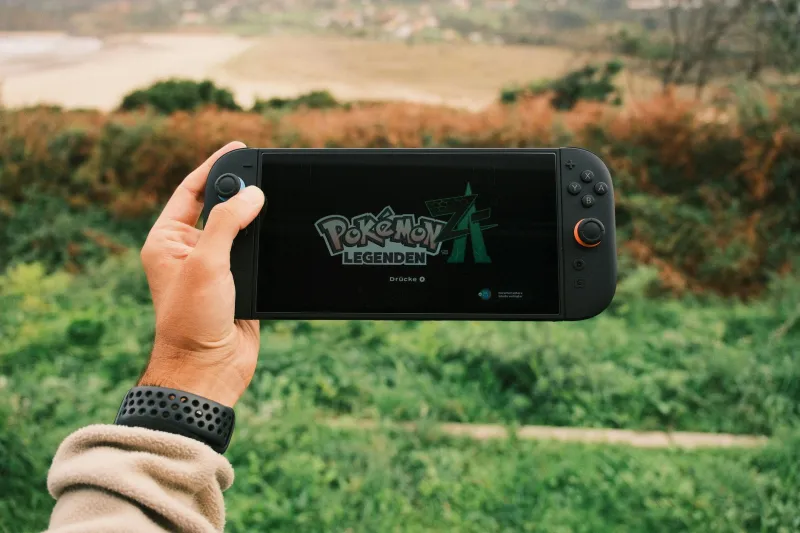
Patch Notes Are Lying to You: How Big Updates Are Making Games Worse
There's a ritual that every modern gamer knows by heart. You buy a new title, slide the disc in or hit install, and then sit there watching a second download bar crawl across your screen. The day-one patch. It's practically a genre unto itself at this point — and in 2026, it's gotten completely out of hand.
But here's the part nobody wants to say out loud: those patches aren't actually fixing things. They're getting larger, more frequent, and somehow leaving games in worse shape than the build that shipped on the cartridge. The version number has become a costume — something studios dress up in to signal competence while quietly hoping the community doesn't notice the seams.
The Numbers Don't Lie (Even If the Patch Notes Do)
Let's talk scale first, because the raw data is genuinely staggering. Industry tracking across major 2025-2026 releases shows that the average day-one patch for a AAA title now weighs in somewhere between 20GB and 60GB — often larger than the base install for games released just five years ago. Some titles have launched with day-one patches that exceeded the original game's file size entirely. Think about that for a second. The fix is bigger than the thing it's fixing.
And the patch cadence post-launch isn't slowing down. Where a studio in 2018 might have shipped a 1.01 update within the first week and called it done, today's live-service-adjacent releases are running through version numbers like they're burning through a season pass. 1.02, 1.03, 1.04 — all within the first 72 hours. Each one arrives with a wall of bullet points in the patch notes. Each one ships with a fresh batch of community bug reports flooding Reddit and X (formerly Twitter) within the hour.
What's Actually in There?
This is where the lie gets interesting. Patch notes are written to communicate action. "Fixed an issue where players could fall through the geometry in Zone 3." "Addressed a crash affecting players on PC with certain GPU configurations." "Improved stability on PlayStation 5." These lines are technically accurate. They just don't tell you what broke in the process of fixing them.
The gaming community has a term for it — "whack-a-mole patching" — and it's become distressingly common. Studios push a fix for a high-visibility bug, and in doing so they crack something else open. The geometry fix introduces a new collision issue somewhere else. The stability improvement somehow makes the loading screens longer. The balance patch that nerfs one overpowered ability accidentally breaks the entire talent tree connected to it.
This isn't a conspiracy. It's a consequence of shipping complex, interconnected systems under impossible timelines. But the way studios communicate about it — through the language of version numbers and patch notes that imply progress — has created a credibility gap that's getting harder to ignore.
The Version Number as PR Shield
Here's the cynical read, and honestly it's hard to argue against: version numbers have become a reputational tool. When a game launches broken and players revolt, the fastest way to signal responsiveness is to push an update. It doesn't matter if that update substantively improves the experience. What matters is that the number ticks up. 1.0 becomes 1.01 becomes 1.02, and somewhere in the discourse, the narrative shifts from "this game is broken" to "the developers are actively working on it."
That's not nothing. Developer responsiveness is genuinely valuable, and plenty of studios have turned disastrous launches into solid products over time. But there's a meaningful difference between studios that patch toward quality and studios that patch toward optics. The former shows up in the actual gameplay. The latter shows up in the PR calendar.
The tell? Look at what doesn't make it into the patch notes. Known issues that have been sitting in bug trackers for weeks. Performance problems that are technically "under investigation" but conveniently never seem to get resolved before the next content drop lands. The stuff that would require a real rework rather than a targeted fix. That material gets quietly shuffled to the bottom of the to-do list while the version number keeps climbing.
The Player Experience Gap
What makes this particularly frustrating for American gamers is the money involved. A standard AAA release runs $70 these days, with deluxe editions pushing past $100. For that price, players have a reasonable expectation that the product they're buying works — or at minimum, that the patches designed to fix it are doing meaningful work.
Instead, the lived experience for a lot of players in 2026 looks like this: buy game, download patch, experience different bugs than the ones listed as fixed, wait for next patch, experience different bugs again. It's a treadmill. And the version numbers spinning upward create a false sense of momentum that can actually delay the community's recognition that a game is fundamentally struggling.
Community spaces like r/gaming and various Discord servers have started developing their own informal patch quality ratings — separate from the official notes — where players document what actually changed versus what was claimed. That kind of grassroots accountability is genuinely useful, but it's also a sign that the official communication has broken down badly enough that players felt the need to build their own infrastructure around it.
What Needs to Change
The fix — if there is one — probably lives in a few places simultaneously. Studios need to be more honest about what patches don't address, not just what they do. Patch notes that include a "known issues" section with real transparency about timeline and scope would go a long way. Some developers already do this well; it's not an impossible ask.
Publishers also need to stop treating launch dates as immovable objects when the underlying product clearly isn't ready. The day-one patch culture exists partly because games are being certified for release in states that require significant post-certification work. If a 40GB day-one patch is already queued before the game is in players' hands, the release date was the wrong date.
And players — as much as it's uncomfortable to say — need to get better at separating patch activity from patch quality. A studio pushing five updates in a week isn't necessarily more responsive than one pushing two. What matters is what those updates actually accomplish when you sit down and play.
The version number should be a signal of quality. Right now, for too many releases, it's just a number. And that gap between what it promises and what it delivers is quietly eroding trust in an industry that can't really afford to lose any more of it.