The 60-Hour Finish Line: Why America's Busiest Gamers Are Quietly Abandoning Long RPGs Before the Credits Roll

The 60-Hour Finish Line: Why America's Busiest Gamers Are Quietly Abandoning Long RPGs Before the Credits Roll
The numbers don't lie, even when we wish they would. According to PlayStation trophy data, only 32% of players who start Persona 5 Royal ever see the credits roll. The Witcher 3, despite being one of the most acclaimed RPGs ever made, has a completion rate of just 26%. Assassin's Creed Valhalla drops to a devastating 23%. For an industry that's convinced itself that "more content equals better value," these statistics represent an existential crisis hiding in plain sight.
American gamers are walking away from epic-length RPGs in unprecedented numbers, and it's not because the games are bad. It's because the fundamental promise of the 100-hour RPG — that time investment equals satisfaction — has broken down in a culture where time itself has become the scarcest commodity.
The Completion Rate Collapse
The data tells a consistent story across platforms and publishers. Steam achievement percentages reveal similar patterns: Dragon Age: Inquisition sees only 18% of players complete the main story, while Mass Effect: Andromeda managed just 22% before its post-launch support was cut. These aren't outliers — they're the new normal for games that demand significant time investment.
What makes this particularly striking is the contrast with shorter experiences. God of War (2018), clocking in at roughly 25 hours, maintains a 47% completion rate. Spider-Man: Miles Morales, designed as a focused 12-hour experience, reaches 58%. The correlation is clear: as game length increases, the percentage of players who see the ending decreases exponentially.
This isn't just about hardcore statistics — it represents millions of abandoned experiences and, more importantly for publishers, millions of players who may not return for sequels because they never finished the first game.
The American Time Crunch
US gaming demographics have shifted dramatically over the past decade. The average American gamer is now 35 years old, working longer hours than previous generations, and juggling responsibilities that didn't exist when 100-hour JRPGs first became popular. The Entertainment Software Association's 2023 data shows that 67% of American gamers are employed full-time, and 41% have children living at home.
This demographic reality creates a fundamental mismatch between game design and player availability. A working parent might have 6-8 hours per week for gaming. At that pace, completing Baldur's Gate 3 becomes a six-month commitment. Even the most dedicated players struggle to maintain narrative engagement over such extended timelines.
The pandemic briefly masked this problem as lockdowns created artificial availability, but as normal schedules resumed, the completion rate crisis has only intensified. Players who started epic RPGs during 2020-2021 are now facing the reality of 40+ hour backlogs with no realistic path to completion.
The Netflix Effect on Gaming
American entertainment consumption has been fundamentally reshaped by streaming services that prioritize binge-ability and immediate satisfaction. Netflix's data-driven approach has proven that audiences prefer 8-10 hour seasons they can complete over weekends rather than 22-episode network seasons that require months of commitment.
Gaming has been slow to adapt to this shift in consumption preferences. While Netflix cancels shows that don't maintain viewer engagement across their entire runtime, game publishers continue to celebrate 100+ hour experiences that the majority of players will never finish.
The most successful recent RPGs have begun incorporating this lesson. Marvel's Spider-Man games offer substantial content that can be completed in weekend gaming sessions, while God of War Ragnarök provides a satisfying 25-hour core experience with optional content for players who want more.
The Hidden Cost of Incompletion
Abandoned games represent more than just wasted development resources — they create negative emotional associations that affect future purchasing decisions. Players who abandon a 60-hour RPG often report feeling guilty about the "wasted" purchase, making them less likely to buy similar experiences.
This psychological impact is particularly pronounced in American gaming culture, which has strong associations between completion and value. Unlike Japanese gaming culture, which often embraces partial experiences and replaying favorite sections, American players tend to view unfinished games as personal failures rather than entertainment consumed.
Publishers are beginning to recognize this as a retention problem. Players who don't finish one game in a franchise are significantly less likely to purchase sequels, regardless of review scores or marketing spend.
The Subscription Service Solution
Game Pass and PlayStation Plus have inadvertently highlighted this completion crisis while also providing a potential solution. Subscription services remove the purchase guilt associated with abandoned games, allowing players to sample epic-length RPGs without feeling obligated to complete them.
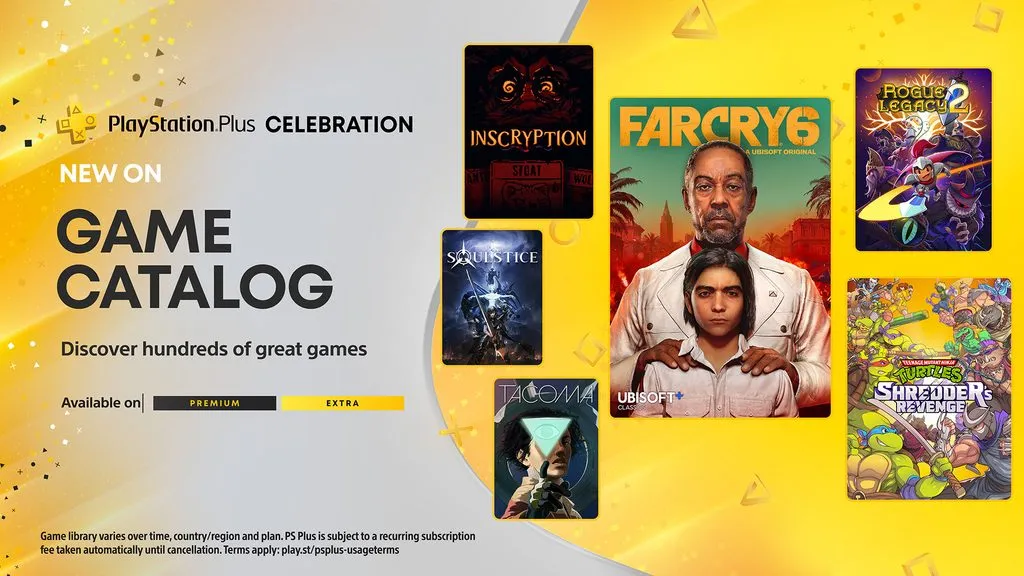 Photo: PlayStation Plus, via blog.playstation.com
 Photo: Game Pass, via static0.gamerantimages.com
Interestingly, Microsoft's internal data suggests that Game Pass subscribers are more likely to try long RPGs but also more likely to abandon them quickly. However, these players also show higher engagement with shorter, focused experiences available on the service.
This pattern suggests that subscription models might actually accelerate the shift toward more digestible game lengths by providing real-time feedback on player behavior rather than relying on purchase data alone.
The Developer Response
Forward-thinking studios are already adapting to this reality. Insomniac Games has built their reputation on delivering "complete" experiences in 15-25 hour packages. Santa Monica Studio redesigned God of War around a more focused narrative that could be completed in reasonable timeframes while still feeling epic in scope.
Even traditionally lengthy franchises are evolving. Final Fantasy XVI was consciously designed as a more streamlined experience compared to its predecessors, and early completion data suggests this approach is working — the game maintains higher engagement rates throughout its runtime.
The most innovative response has come from studios embracing episodic or chapter-based structures. Life is Strange games provide complete emotional experiences in 2-3 hour chunks, allowing players to feel satisfied even if they don't continue to subsequent episodes.
Quality Over Quantity: The New Value Proposition
The industry's obsession with playtime hours as a value metric has created games padded with repetitive content that actively discourages completion. Many modern RPGs could be cut by 30-40% without losing any meaningful content, but publishers remain convinced that "more" equals "better."
Successful shorter experiences prove that players value density over duration. Hades provides more meaningful progression and narrative satisfaction in 20 hours than many 100-hour RPGs deliver across their entire runtime. The game's high completion rate (67% on Steam) demonstrates that players will finish games that respect their time.
The Path Forward
The solution isn't to eliminate long-form RPGs entirely — there's still an audience for epic adventures. Instead, the industry needs to embrace multiple approaches to content delivery and stop treating 100+ hours as the default measure of value.
This means designing modular experiences that provide satisfaction at multiple completion points, creating clear narrative breakpoints that feel like natural stopping places, and most importantly, acknowledging that an unfinished great game can be more valuable than a completed mediocre one.
The publishers who recognize this shift first — who design for completion rather than duration — will capture the loyalty of America's time-strapped gaming audience and build sustainable franchises for the next decade.
The 60-hour finish line isn't a limitation to overcome — it's a design constraint that forces creativity, focus, and respect for the most precious resource any player can offer: their time.