The Platform Ceiling: Why Console Generations Are Getting Longer — and What That Means for the Games You're Playing Right Now
The Platform Ceiling: Why Console Generations Are Getting Longer — and What That Means for the Games You're Playing Right Now
We're living through the longest console generation in gaming history, and nobody wants to talk about what that actually means for the games landing on our hard drives in 2026.
The PlayStation 5 and Xbox Series X launched in November 2020. As I write this, they're approaching their sixth birthday with no credible rumors of successors on the horizon. Compare that to previous generations: PS4 lasted seven years, PS3 lasted seven years, but PS2 only lasted six, and the original PlayStation managed just five. We're not just looking at a long generation — we're looking at a fundamentally different approach to hardware cycles that's reshaping how games get made.
And American console owners are starting to feel the squeeze.
The Moore's Law Slowdown
The dirty secret behind these extended cycles isn't just economics — it's physics. Moore's Law, the principle that computing power doubles every two years, has been slowing down for over a decade. The jump from PS4 to PS5 was significant but not revolutionary. Ray tracing, faster loading, and 4K/60fps are nice, but they're not the generational leap that defined previous console transitions.
When the PS2 launched, it could do things the original PlayStation literally couldn't dream of. When the PS5 launched, it mostly did PS4 things better. That's not a criticism — it's a recognition that we're hitting fundamental limits in consumer-grade silicon.
The result? Console manufacturers have less incentive to push new hardware, and developers are stuck optimizing for machines that were already showing their age when Elden Ring launched.
The Development Compromise
Here's what extended console generations actually mean for the games you're playing: creative compromise at every level.
Game developers today are making the same calculation that plagued the PS3/Xbox 360 era's final years. Do you push the hardware to its absolute limits and risk performance issues, or do you play it safe and leave potential on the table? The difference is that in 2026, "playing it safe" means accepting limitations that feel increasingly arbitrary.
Look at Baldur's Gate 3's split-screen co-op controversy on Xbox Series S. Larian Studios had to fundamentally redesign core features because Microsoft's commitment to hardware parity meant the weakest console in the ecosystem was holding back the entire platform. That's not a bug — it's a feature of extended console cycles. The hardware ceiling becomes a creative ceiling.
Meanwhile, PC gaming continues to advance. RTX 4090 owners are playing the same games as PS5 owners, but with ray tracing settings, frame rates, and visual fidelity that make console versions look like last-gen ports. The gap is widening, and it's creating a two-tier gaming ecosystem that didn't exist when console generations moved faster.
The American Gaming Divide
This matters particularly for American gamers because we're the most console-focused major gaming market. While PC gaming dominates in regions like Korea and parts of Europe, the US gaming landscape is still built around PlayStation and Xbox ecosystems. When those ecosystems stagnate, American gaming stagnates.
Consider the games that defined 2025 and early 2026. Spider-Man 2, Alan Wake 2, Avatar: Frontiers of Pandora — these are all games clearly pushing against current-gen limitations. Loading screens disguised as subway rides, texture pop-in during fast traversal, frame rate drops during complex scenes. These aren't signs of poor optimization; they're signs of developers trying to create next-gen experiences on hardware that's no longer next-gen.
The most ambitious games are starting to feel constrained in ways that would have been unthinkable three years ago. When GTA VI launches later this year, it'll be targeting hardware that's already six years old. That's not ideal for a game that's supposed to define the next decade of open-world design.
The Economics of Stagnation
From a business perspective, extended console cycles make perfect sense. Console manufacturers lose money on every unit sold and make it back through software licensing and services. The longer they can stretch a generation, the more profitable it becomes. Sony and Microsoft aren't stupid — they're responding to economic realities.
But there's a hidden cost: innovation stagnation. When developers know they're targeting the same hardware for 8+ years, they optimize for that hardware rather than pushing boundaries. We get more polished experiences, but fewer genuinely surprising ones.
The most creative advances in recent gaming have come from areas where hardware limitations force innovation: Nintendo's hybrid approach with the Switch, VR's unique input methods, mobile gaming's touch interfaces. When console hardware stays static, so does console game design.
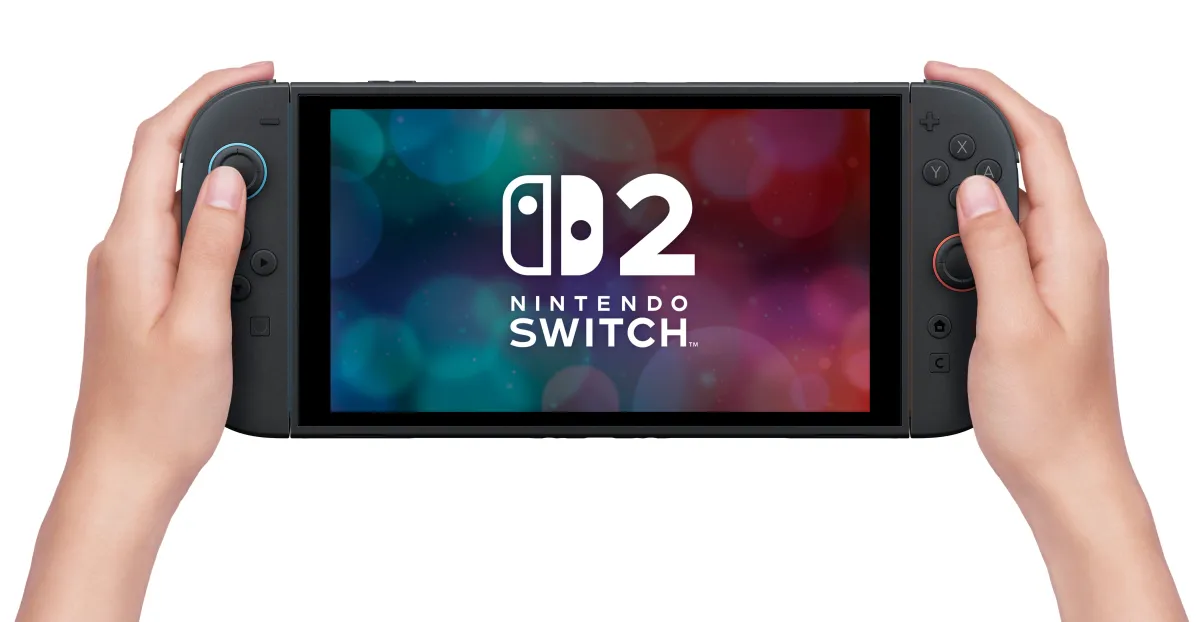 Photo: Nintendo Switch, via static1.thegamerimages.com
The Mid-Gen Refresh Problem
Both Sony and Microsoft have hinted at potential mid-generation refreshes — think PS5 Pro or Xbox Series X Pro. But these half-step upgrades create their own problems. Developers can't target Pro features exclusively without alienating base console owners, so you end up with marginal improvements that don't justify the hardware investment.
It's the worst of both worlds: more expensive hardware that doesn't enable genuinely new experiences, and continued creative constraints because the lowest common denominator still matters.
Compare this to the mobile gaming ecosystem, where new iPhone and Android flagship features get adopted by developers within months. When console generations last 8+ years, innovation cycles slow to match.
What This Means for Your Gaming Library
If you're a console gamer in 2026, here's what extended generations mean for your actual gaming experience:
More Polish, Less Ambition: Games are getting more stable and refined, but fewer are attempting genuinely new things. Developers know the hardware inside and out, so they're optimizing rather than innovating.
Platform Parity Problems: Cross-platform releases increasingly target the weakest console in the ecosystem, meaning everyone gets held back by the lowest common denominator.
PC Gaming Advantage: The gap between high-end PC and console gaming is wider than it's been since the early 2000s. If you want cutting-edge visuals and performance, console gaming isn't the answer.
Service Over Innovation: Console manufacturers are focusing on services (Game Pass, PS Plus, cloud gaming) rather than hardware innovation. That's great for value, but it doesn't push the medium forward.
The Path Forward
Extended console generations aren't inherently bad, but they require a different approach to game development and hardware innovation. Nintendo proved that innovation doesn't require raw power — the Switch's hybrid design created entirely new gaming possibilities without cutting-edge silicon.
The question is whether Sony and Microsoft can find similar innovations within extended hardware cycles, or if we're stuck in a holding pattern until manufacturing costs and physics allow for another meaningful generational leap.
For American gamers, the choice is increasingly clear: accept the limitations of extended console generations, or invest in PC gaming for experiences that push boundaries. The middle ground — hoping console gaming will suddenly accelerate innovation — seems increasingly unrealistic.
The platform ceiling is real, and we're all living under it.